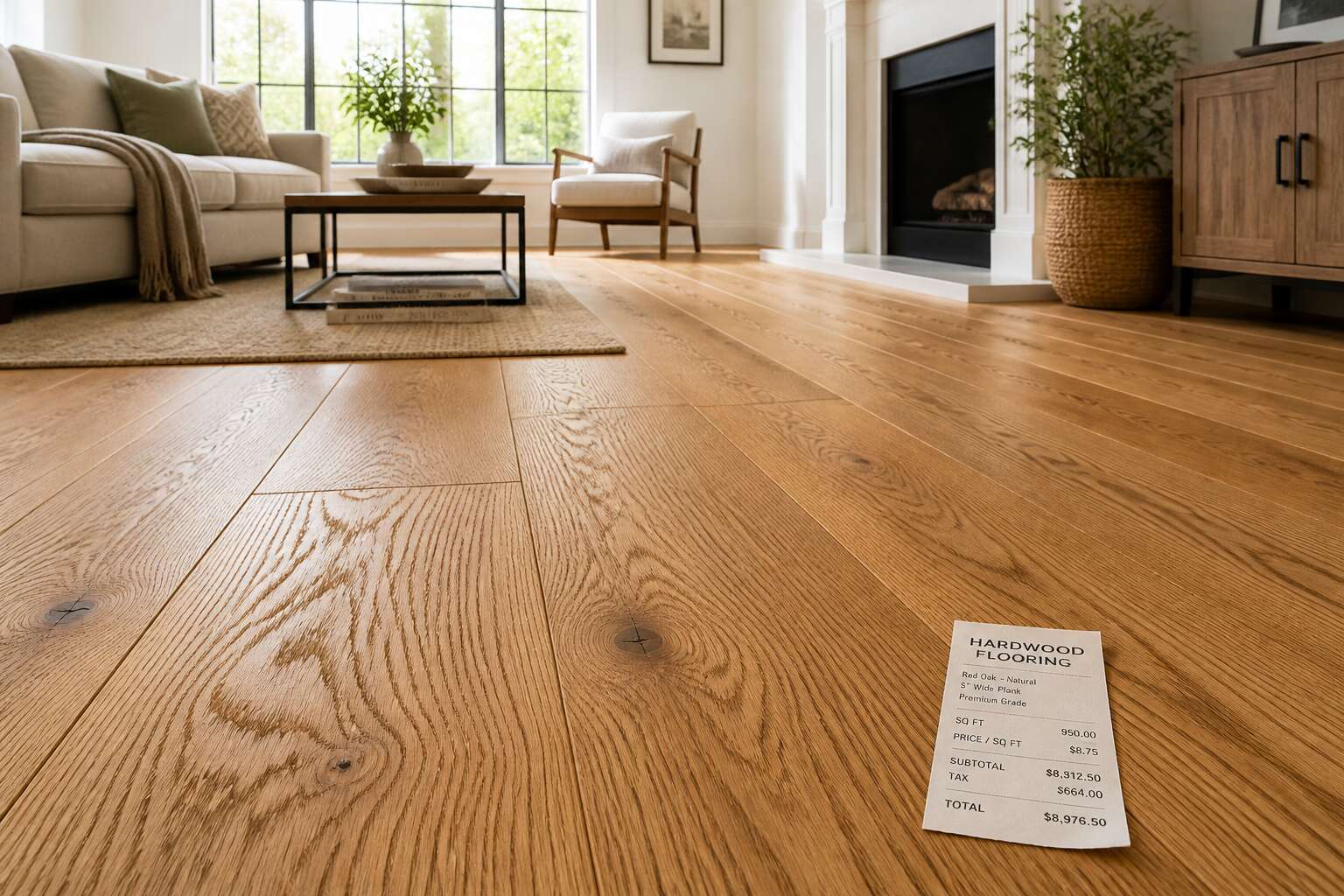
Understanding the Price Range for Timber Flooring
Average Installation Cost per Square Foot
In South Africa, the wooden floors cost varies widely. A 2023 survey placed timber flooring installation between R150 and R450 per square foot, depending on the species and subfloor condition. That gap comes from moisture barriers, screed preparation, and the carpenter’s experience.
Average installation cost per square foot also shifts with labour rates in Cape Town versus Johannesburg. Solid hardwood demands more time than engineered planks, pushing the per-metre figure upward. For a typical 80 square metre home, you might face R12,000 to R36,000 in labour alone!
- Solid oak requires acclimatisation and secret nailing
- Engineered timber allows floating installation
- Bamboo sits on the cheaper end, but wears differently
Each choice alters the final tally. The wooden floors cost, therefore, depends on material selection and site readiness, not a simple price tag.
Solid Hardwood vs. Engineered Wood Pricing
Standing in a Cape Town showroom, I watched a couple size up solid oak against engineered planks. The price gap was stark: R800 per square metre for solid hardwood, R450 for engineered. That difference comes from how each product is built. Solid oak planks are milled from a single piece of timber, so every knot and grain pattern is unique. Engineered wood bonds a real hardwood veneer to plywood layers, which uses far less of the expensive tree. The wooden floors cost for solid hardwood also reflects milling waste. A 20mm plank starts as a 30mm rough-sawn board. Engineered planks waste very little, which explains their friendlier entry price.
Several factors shift the wooden floors cost beyond the basic category:
- Species rarity and import duties
- Veneer thickness and core quality
- Finish type, whether pre-oiled or site-sanded
You pay for permanence with solid wood. You pay for practicality with engineered. Both need seasonal acclimatisation, but the wooden floors cost difference comes down to how much of the tree survives the factory.
Impact of Wood Grade and Quality on Price
A single knot can shift the price of a timber plank by more than R200 per square metre. In a Johannesburg showroom, I watched a buyer pass over a Grade B oak board because the grain broke at a knot, even though the structural integrity was perfect. That reaction explains the price gap.
Wood grade determines how much of the tree survives the mill. Lower grades use more of the log, so they cost less. This is where the wooden floors cost becomes negotiable, depending on your tolerance for character marks.
- Clear grade: no knots, uniform colour, highest price
- Select grade: minor grain variation, moderate price
- Rustic grade: prominent knots, lowest price
Quality also affects the wooden floors cost through moisture content and milling precision. A poorly milled plank holds moisture and warps after installation. Paying for a consistent grade ensures the floor performs as expected across seasons.
Regional Differences in Material and Labor Rates
Regional differences have a bigger impact on the wooden floors cost than most homeowners expect. In Johannesburg, the same imported oak runs 8% higher than in Durban. Port proximity cuts freight expense in the coastal city, but humidity forces an extra two days of acclimatisation before installation. Cape Town lands between the two, with labour rates inflated by construction demand along the Atlantic seaboard.
Material prices track the exchange rate across provinces. Labour is the true variable. A Sandton fitter quotes R180 per square metre; the same contractor charges R140 in Pretoria.
Regional factors that shift the final quote:
- Distance from the port of entry
- Installer density in your metro area
- Coastal humidity and its effect on installation timelines
This explains why two homeowners a street apart can receive different wooden floors cost for identical timber.
Key Factors That Influence Your Final Bill
Material Selection and Board Thickness
Nobody strolls into a showroom expecting wooden floors cost to triple over a few millimetres, but it happens. I once watched a couple choose a 10mm board for their Johannesburg loft, only to discover that their uneven screed required leveling compound. That is how budgets vanish!
Material selection carries its own surprises. Certain species, like kiaat, have interlocking grains that slow the sanding process. Board thickness then interacts with your subfloor. Consider this:
- 12mm boards are lighter on the pocket and easier to handle, yet they magnify every subfloor imperfection.
- 20mm boards give solid depth, but their weight means a shorter span limit and more effort for your installer.
Your final wooden floors cost, therefore, is a direct result of these choices.
Labor Charges and Contractor Expertise
Most homeowners know the price of oak or kiaat, but few can name the installer’s hourly rate. That gap skews the wooden floors cost more than any timber choice. In South Africa, skilled installers charge between R80 and R200 per square meter, and range reflects their competence.
- The condition of the subfloor and the need for leveling compounds.
- The number of cuts required around corners, pillars, and doorframes.
- The experience needed for species with interlocking grains.
An expert contractor checks the screed, measures moisture levels, and allows boards to acclimatize before installation. These steps add days to the project but prevent warp and cupping later. The cheapest quote skips them. You then pay twice, once for install and again for repair. The skill of the installer dictates the lifespan of the floor, so the wooden floors cost only appears after a few seasons of use.
Subfloor Preparation and Levelling Work
Beneath every floor lies a surface most homeowners never inspect. That hidden layer decides whether your wooden floors cost stays sensible or rises through cracked planks and hollow spots. A screed deviating five millimeters across a room needs attention before the first board is laid.
Leveling compounds are not optional. In older South African homes, concrete slabs slope toward old drainage points or settle unevenly across decades. Contractors apply self-leveling screed at roughly R50 to R120 per square meter, based on the depth of correction needed.
- Moisture testing the slab to prevent fungal growth
- Grinding high spots that exceed tolerance
- Priming the substrate for proper adhesion
Skipping these steps guarantees movement later. The wooden floors cost saved on preparation returns as repair bills within two rainy seasons. A contractor who quotes without inspecting the subfloor is guessing, and that guess lands on your account.
Underlayment, Adhesives, and Moisture Barriers
The quietest failures in flooring happen beneath the surface. Underlayment, adhesives, and moisture barriers shape the wooden floors cost more than most quote sheets admit. Underlayment absorbs minor imperfections, reduces sound transmission, and offers thermal insulation. Adhesives keep planks fixed during seasonal expansion. A poor bond allows movement that eventually splits tongue and groove joints.
Moisture barriers are non-negotiable in coastal cities like Durban or Cape Town. High humidity migrates through concrete slabs and into wood fibres. The result is cupping, warping, and a repair bill that climbs with every replacement board!
Contractors often quote these materials separately. That line item covers several choices:
- Foam underlayment, cheapest but thin
- Cork or rubber, better soundproofing
- Polyethylene sheeting, stops moisture vapour
The final wooden floors cost depends on these layers as much as the wood itself. A flooring estimate that omits underlayment will surface as an unexpected charge later.
Finishing, Staining, and Sealing Expenses
The final finish determines whether your floor looks like a showpiece or a salvage job. Sanding dust settles into every grain, and the stain absorbs differently across boards. A skilled finisher charges premium rates because mistakes here are permanent. Expect finishing, staining, and sealing to represent up to 30 percent of your total wooden floors cost.
Sealers protect against moisture and foot traffic, but the choice of product matters. Water-based lacquers dry fast and stay clear. Oil-based finishes deepen the wood’s tone but take longer to cure. UV oils require less maintenance over time.
- Stain colour matching across different wood batches
- Number of coats applied and drying time between them
- Surface preparation, including buffing and vacuuming
Each of these variables shifts the final invoice. A cheap sealant might fail within two years, forcing a full re-sand and refinish. That rework inflates your wooden floors cost beyond any initial savings.
Comparing Flooring Types and Their Associated Expenses
Solid Hardwood: Upfront Cost and Lifespan
Solid hardwood commands a premium at installation, yet the wooden floors cost often surprises first time buyers. What you pay upfront buys a surface that can be refinished five or six times over its life. In my experience, a well maintained oak floor from the 1970s still looks richer than any modern alternative. Other materials fail that test.
- Solid hardwood: high upfront outlay, 50 plus year service.
- Engineered wood: mid range outlay, 20 to 40 year service.
- Laminate: low outlay, 15 to 25 year service.
That lifespan difference changes the real expense. A floor that lasts 50 years spreads its cost far thinner than one replaced every 20. Solid hardwood is not cheap, but it is honest about what it delivers.
Engineered Timber: Price vs. Durability
Ask a flooring salesman about engineered timber and you will hear “versatile” too often. Engineered wood is a real oak layer glued to a plywood base. The wooden floors cost sits below solid hardwood, which attracts budget conscious buyers. However, the wear layer decides the truth. A 4mm top accepts one sanding. A 6mm top accepts two. Anything thinner is harder to justify.
My South African clients overlook humidity when comparing options. Engineered planks resist moisture better than solid strips, but coastal air punishes thin surface layers.
- Price: lower than solid, higher than laminate
- Service life: 20 to 40 years with honest care
- Refinishing: limited by the veneer thickness
The real wooden floors cost of engineered timber shows at replacement time. Mid range rates deliver a floor that will need replacement before the oak next door. That arrangement works, provided you understand where the money went.
Laminate and Luxury Vinyl as Budget Alternatives
Laminate and luxury vinyl quietly solve what solid timber cannot. They replicate oak grain and slate texture through photographic layers, yet their wooden floors cost lands far below any hardwood or engineered option. In South African homes, where imported oak prices climb with exchange rates, these alternatives claim a growing share of flooring budgets.
Laminate performs well in dry interiors. Luxury vinyl handles damp bathrooms and kitchens without warping. Neither accepts sanding or refinishing. You choose the visual, live with the surface, and replace it when worn. I have watched clients save thousands!
- Laminate: wear layer protects the print, not the wood
- Luxury vinyl: flexible, waterproof, quieter underfoot
- Both: no sanding, no staining, no sealing
The honest tradeoff hides in lifespan. Quality laminate serves a decade or two under moderate foot traffic. Vinyl can stretch longer, but neither approaches timber’s thirty year arc. That lower wooden floors cost buys convenience, not permanence.
Bamboo and Cork: Eco-Friendly Price Points
Bamboo and cork occupy a strange territory in the flooring market. Their wooden floors cost settles between budget synthetics and solid timber, a middle ground that many South African homeowners ignore. Bamboo is a grass, not a tree, and it compresses into a dense surface that resists denting. Cork comes from harvested bark, leaving the tree standing, and provides a springy underfoot feel that muffles footsteps.
The price gap between them is real. Bamboo runs cheaper in Cape Town supply stores, while cork carries a premium for its acoustic properties. I have watched clients choose bamboo for rental flats and cork for home offices.
Consider this:
- Bamboo suits dry living areas.
- Cork handles bedrooms and studies.
- Both fail in persistent moisture.
Their wooden floors cost buys sustainability, not immortality. You replace them sooner than timber, but you leave a lighter mark on the earth.
Exotic and Reclaimed Wood Premiums
Some imported species carry a premium that has little to do with durability. The wooden floors cost for African teak, for example, reflects its rarity in local supply yards and the transport fees attached to foreign sourcing. Reclaimed timber behaves differently. It comes from old warehouses, railway sleepers, and demolished homesteads, and each plank arrives with nail holes, weathered grain, and finished patina that new wood cannot replicate.
The expense lies in the preparation. Salvaged boards require de-nailing, planing, and kiln drying to remove pests. That labour adds up quickly.
Different factors push the final price:
– Source distance and scarcity
– Drying and treatment time
– Waste from cutting around defects
– Matching old board widths
You pay for character, but also for the patience of the tradesman who turns rubble into flooring. That is the true premium.
Installation Costs and Unexpected Add-Ons
Professional Fitting Rates by Method
The genuine wooden floors cost quote often excludes the full weight of installation. When a local contractor calculates fitting rates, the method dictates the labour burden. Nail-down solid planks demands hammer and pneumatic force, a slower process that commands higher fees. Floating engineered boards click into place with relative speed, yet the prep work still devours hours. Ripping out old coverings, shifting heavy furniture, or cutting door jambs to size arrives later as unexpected add-ons.
Consider how each method alters the final ledger:
- Nail-down: highest labour, subfloor integrity required
- Glue-down: medium rate, moisture checks essential
- Floating: lower rate, but underlayment adds fees
These rates never include the quiet extras: hauling debris, moving appliances, or levelling dips discovered mid-project. Each surprise swells the wooden floors cost beyond the quoted figure.
DIY Approach vs. Hiring a Specialist
Many homeowners in Johannesburg and Cape Town attempt the DIY route to trim the wooden floors cost. The arithmetic appears straightforward on paper. A pallet of planks, a borrowed nailer, and a weekend of labour seem cheaper than a specialist’s invoice. Then the circular saw blade dulls, the first row bows, and the rental tool costs pile up. A specialist arrives with pre-owned equipment and calibrated tools. They catch the subfloor dips you missed. Their quote includes disposal fees and acoustic underlay. I have watched DIY projects stall for months because one door jamb refused to align!
The hidden ledger often reads:
– Replacement blades and bits
– Tool rental overruns
– Extra adhesive for uneven surfaces
– Skip hire for old flooring debris
Each line item erodes the perceived savings. When the wooden floors cost is recalculated after mistakes, the specialist suddenly looks reasonable.
Moving Furniture and Appliance Fees
Few homeowners budget for the logistics of moving a piano or the awkward journey of a refrigerator on casters. Installation quotes often assume an empty room. The reality involves couches, wardrobes, and appliances that must travel elsewhere during sanding and sealing. Movers charge by the hour. Storage units add their own ledger line. Some specialists include furniture shifting in their wooden floors cost, but many do not.
- Two trips for large appliances
- Disconnecting and reconnecting the washing machine
- Lifting heavy safes or antiques
- Temporary storage for rugs and curtains
Each service carries a fee. A quote that looked competitive can swell by thousands of rand once the moving truck arrives. Nobody expects the moving truck bill! I have seen homeowners stare at the final invoice, stunned by a line item they never anticipated. The wooden floors cost includes every item that must move out of the way first.
Removal and Disposal of Old Flooring
Installation quotes rarely include the cost of ripping out what lies beneath. Carpet, vinyl, or glue-down tiles must be removed before a single plank is laid. That labour carries its own price, and few contractors fold it into the wooden floors cost quote.
Disposal adds another line. Loads of old material need transport to a waste site, and municipal dumps charge by weight. The removal process can take a full day depending on the adhesive used.
- Staples and adhesive residue removal
- Underfloor moisture testing before new installation
- Skip hire or rubbish removal services
A quote that looks competitive can climb by R60 to R100 per square metre once stripping and hauling are added. Homeowners who budget for these hidden layers avoid the shock of a swollen final invoice.
Waste Cleanup and Site Preparation Charges
Site preparation charges often get buried in the fine print. A contractor may quote for a clean, level surface, yet the reality involves sweeping, vacuuming, and managing sawdust clouds that settle over every windowsill. That labour shows up as a separate line item, sometimes labelled “site protection” or “daily cleanup.”
Unexpected add-ons can include:
– Protective sheeting over doorways and furniture
– Dust extraction equipment rental
– Additional trips for offcuts and packaging disposal
These expenses chip away at the wooden floors cost quote if not itemised upfront. A professional will walk the space, note the obstacles, and price the preparation honestly. I have seen final invoices climb by ten percent simply because no one asked about site hygiene. Homeowners who request a breakdown before signing tend to avoid vague charges, and the final wooden floors cost stays predictable.
Smart Budgeting Strategies for Your Flooring Project
Requesting Accurate and Comparable Quotes
Ask three contractors for a quote and you will get three versions of reality. One includes sanding, another charges extra for it. One assumes your subfloor is flat; the other brings levelling compound. Comparing wooden floors cost is less about the headline number and more about what hides inside each line item. A solid quote will list:
- materials and labour separately
- brand and grade of wood
- delivery and access fees
- timeline and payment schedule
In South Africa, load shedding can stall sanding machines and delivery times, so ask how the contractor handles delays. The cheapest quote for wooden floors cost often becomes the most expensive once extras appear. Check that each quote covers the same scope of work. Your future self will thank you when the final invoice matches the estimate.
Seasonal Discounts and Promotional Periods
Timing your purchase around the quieter months can shift the wooden floors cost more than any grade upgrade. In South Africa, the winter months of June and July typically see fewer renovation projects, so many installers run promotions to keep their crews productive. A contractor who quotes ten percent less in August may hold firm at full price by October.
End of financial year specials from suppliers are worth tracking too. Stock that must move before inventory audits often carries discounts of five to fifteen percent. If you can wait for a slow period, you gain leverage that no amount of peak season haggling will produce. The same material becomes a different wooden floors cost simply by choosing the right week to sign.
Long-Term Maintenance and Refinishing Costs
Budgeting for a floor demands a longer gaze than most suppliers encourage. The wooden floors cost appears simple at the quote stage, but the ledger extends beyond installation day. Floors collect scuffs, moisture stains, and the quiet erosion of daily traffic. Refinishing is a matter of when, not if. In South Africa, the cycle lands between seven and twelve years.
Set aside a fund for that eventual sanding and sealing. A three-coat sand and seal service ranges from R350 to R600 per square metre, while edges and thresholds attract surcharges because they consume time.
That figure should sit beside the wooden floors cost in any realistic plan. Many homeowners buy a premium board, then cannot afford the resanding when the finish dulls. The wiser approach prices installation and the first maintenance cycle as a single decision. A cheaper board needing refinishing at year five may exceed a durable option’s total expense at year eight.
Financing Options and Payment Plans
Financing a floor demands a clear view of your monthly cash flow before signing anything. The wooden floors cost often arrives as a single daunting number, yet payment plans split that sum into manageable instalments. Retailers in South Africa offer interest bearing options, while some suppliers extend six month interest free windows during quieter seasons.
Consider layering your strategy. A deposit from savings covers half the project. The remainder follows an amortisation schedule with fixed repayments.
- Compare effective interest rates across three lenders before committing.
- Ask whether the quote includes delivery, since transport fees inflate the wooden floors cost.
- Negotiate a discount for upfront payment, then rebuild your buffer.
I have watched homeowners choose shorter repayment terms to dodge interest, only to struggle when sanding costs surface. Budget for the full ownership cycle, not merely the installation invoice!

0 Comments