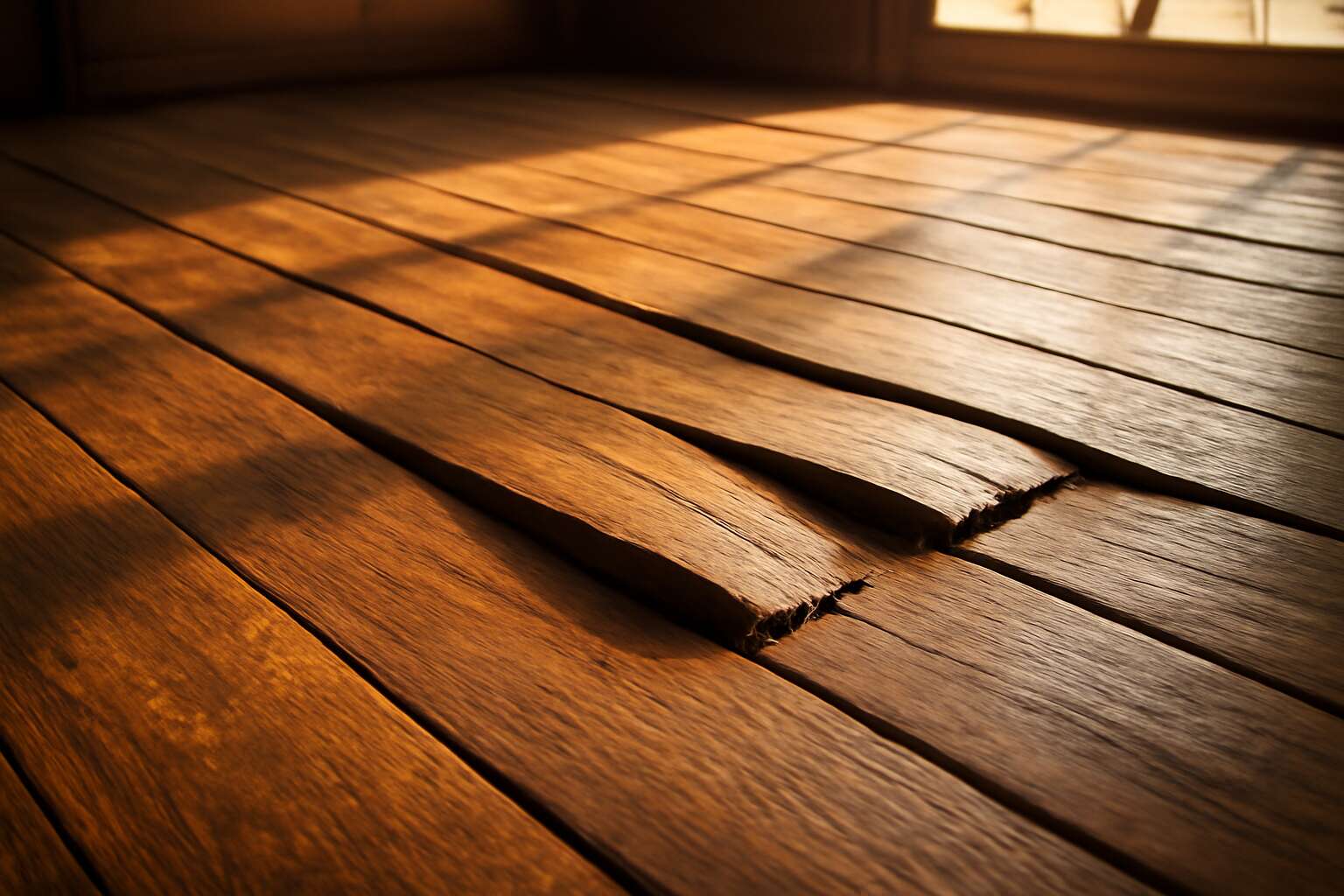
Causes behind wooden floor lifting
Moisture intrusion and humidity fluctuations
So, why does wooden floor lift? Moisture intrusion and humidity fluctuations push wood to adjust, swelling with dampness and retracting as it dries. Over time, nails loosen and adhesives fail, letting boards rise at edges and form gaps that catch shoes and shadows alike.
- Leaky plumbing and spills that seep into gaps
- Rising damp from subfloors or slabs
- High humidity and poor ventilation in homes
South Africa’s climate intensifies this dance between expansion and contraction, especially in kitchens and bathrooms where steam and spills are common. When the cycle repeats, the quiet wood reveals its limits—cupping, buckling, and a floor that no longer lies flat.
Subfloor movement and structural settling
What lies beneath matters. In asking why does wooden floor lift, we discover the understructure as the true culprit—the subfloor and the frame that shift and breathe with time.
Subfloor movement and structural settling are the chief drivers. In South Africa’s clay soils, foundation shifts nudge joists, loosen fasteners, and let edges rise, while boards develop rifts and a gentle upward curl.
- Uneven subfloor and sagging joists
- Foundation movement or pier rotation
- Damage to framing from insects or rot
These forces tend to reveal themselves gradually, especially in older homes or buildings set on reactive soils, where daily rhythms of heat and load press on the timber.
Incorrect nail or fastener installation and spacing
A single misplaced nail can start a ripple that lifts a plank. Poor spacing and the wrong fastener choice let edges rise and boards loosen, even when humidity stays steady. In practice, the fix is not dramatic, but the effect stacks over time, showing up as creaks and uneven highs across a room.
- Incorrect nail or fastener installation close to edges or ends
- Too few fasteners along long boards, allowing movement between anchor points
- Using the wrong type or size of fastener, which can corrode or pull out over heat cycles
These gaps let boards drift with foot traffic and expansion. The question plagues many South African homes with reactive soils and seasonal shrink-swell; why does wooden floor lift? The culprit is under your feet: the anchor points and how the boards are fastened, not just the surface finish.
Temperature-related expansion and contraction
Temp swings are the quiet saboteur behind a lifted wooden floor. When the SA sun edges around the room and evenings cool down, timber expands and contracts in response. So, why does wooden floor lift? Temperature-related expansion and contraction is a chief driver, not just a cosmetic fault.
- Wood expands when heated and contracts when cooled, stretching joints and edges.
- Longer boards and wide planks show more noticeable movement under daily temperature cycles.
- Sunlit zones near windows and underfloor heating exaggerate thermal shifts.
When temperatures swing, the floor keeps moving underfoot—creaks and highs whispering the science beneath. In SA homes, this quiet geometry of timber at work is a fact you feel whenever the room warms or cools.
Water damage from spills or leaks
In SA homes, a tiny splash can become a season-long trouble. This begs the question: why does wooden floor lift when water hides under boards? Water damage from spills or leaks is a patient saboteur—it seeps into crevices, swells timber, and loosens adhesives, quietly lifting sections toward the subfloor. What starts as a subtle warp in a corner can swell into a ridgeline that catches light and sound, turning a quiet room into timber’s slow-moving drama!
- Spills that saturate edge gaps and travel beneath boards
- Leaking pipes, taps, or appliance hoses tucked under sinks or behind cupboards
- Roof or flashing failures that allow moisture to seep into timber over time
Moisture in the timber swells the grain and lifts edges, turning calm planks into a bumpy surface that changes how a room feels. The culprit hides in plain sight, awaiting a quiet moment to reveal its work.
Installation and material factors that contribute to lifting
Inadequate expansion gaps during installation
In South Africa’s climate swings, a floor can lift without warning. Small missteps in the installation stage loom large later. So why does wooden floor lift? Inadequate expansion gaps during installation are a primary culprit, letting boards push against each other as they try to breathe with heat and moisture.
Beyond gaps, the choice of timber and how it was prepared matters. Species with higher dimensional change, boards cut tight, or finishes that limit movement can trap stress. Orientation and tongue-and-groove design influence how floors accommodate seasonal shifts. When boards are laid with insufficient space to move, lifting follows—especially where long runs meet walls or transitions.
Consider these material factors that quietly shape the outcome:
- Expansion-capable design in the joints
- Moisture content of boards at install and edge treatment
- Underlayment and subfloor compatibility to allow movement
Differences between solid wood and engineered wood
Timber breathes, and South Africa’s climate makes it sing at dawn. That master carpenter’s quip rings true: why does wooden floor lift? The answer lies in how timber meets heat and moisture as one living surface—truly!
Solid wood carries more risk of restless movement—its grains drink moisture and swell, then release it as humidity falls. Engineered wood, with a layered core, steadies the hum of change but still follows seasons and rooms.
Difference shows in preparation: moisture content at install, the species’ dimensional change, and how boards are finished. A tight-cut board with a heavy finish can trap strains; a well-matched underlayment invites movement rather than rebellion.
Two telling factors soften the lift:
- Joint design that accommodates subtle movement
- Underlayment compatibility with the substrate
Glue-down versus nail-down methods and their risks
One in three South African homes notices lift in a wooden floor within a decade, a quiet tension underfoot. So why does wooden floor lift? This question rides the line between installation choice and the living timber’s response to heat and moisture over time.
Glue-down methods clamp boards to the subfloor, creating a solid skin that resists small nods and sways. Nail-down installs permit a touch more give, letting boards breathe with seasonal changes. The choice hinges on substrate flatness, adhesive compatibility, and the finish that seals the surface, guiding how the floor behaves under pressure.
Consider these installation and material factors, then glance at the practical differences in how each method handles movement:
- Glue-down risks on uneven or damp substrates, where the adhesive traps micro-movement and can buckle.
- Nail-down risks from mis-spaced nails and restricted movement, which can lead to pops or squeaks.
Unprepared or uneven subfloors and poor underlayment
A base that’s not flat is the quiet saboteur that only shows itself after the first season. When the substrate isn’t true, even the bravest boards can lean and reveal a lift. The question, why does wooden floor lift, sticks around because the underfoot system often can’t flex with moisture and seasonal swings.
To get ahead of this, keep the base level to within a millimeter and pick underlayment that suits the timber and SA climate. If the underlayment is misaligned, too thin, or mismatched with the installation method, tiny shifts magnify into noticeable lifts.
- Base flatness issues
- Underlayment thickness inconsistency
- Substrate-adhesive mismatch
With a base that behaves and materials that breathe in step, a floor stays true across humidity cycles and seasons.
Lack of acclimation time before installation
For homeowners wondering why does wooden floor lift, the answer starts with installation and material choices. In South Africa’s mixed climates, a floor should breathe with the season, not frost over into a stubborn bow when humidity shifts. The culprit often hides in plain sight, waiting until the first stormy day to reveal itself.
When acclimation time is skipped, boards enter the home with moisture fingerprints that become stresses as the air changes. A proper acclimation phase lets timber align with the room’s humidity, and without it, the stage is set for lift to reveal itself later.
Two installation factors silently shape stability:
- Mismatch in moisture content across board bundles
- Rigid fastener patterns that don’t allow for natural movement
In SA homes, such material choices matter more in coastal zones and inland plains, where temperature swings and moisture tides behave differently year to year.
Signs and symptoms of lifting floors
Rising or buckling boards and visible gaps
A floor should stay grounded. Rising or buckling boards and visible gaps are the telltale signals that something is unsettled beneath the surface. In South Africa’s varying climate, these signs often appear after humidity swings. So, why does wooden floor lift, you might ask? The answer hides in the floor’s conversation with its substructure—planks shifting, seams widening, a quiet upheaval underfoot.
- Rising or buckling boards when walked on
- Visible gaps between planks
- Edges lifting near thresholds
These cues aren’t cosmetic quirks but a language of stress, pointing to moisture imbalances, subfloor movement, or install faults that need listening to rather than ignoring.
Creaking sounds and loose boards
Timber listens. A quiet floor becomes a chorus when moisture and wood disagree, and the feet reveal the score. In South Africa’s climate, daily humidity swings play the metronome. So, why does wooden floor lift? The answer lingers in a conversation between plank and substructure, a soft upheaval sounding beneath our steps.
Creaking sounds travel along joists when you step, and loose boards yield under pressure, both speaking softly of instability below. These hints aren’t cosmetic quirks but a clockwork of stress that foreshadows larger shifts.
- Creaking sounds travel along joists as you step
- Loose boards yield underfoot, revealing subtle movement
These cues whisper a story of moisture balances, subfloor realities, and the weathered arithmetic of a home’s wooden spine. The room answers with a quiet resonance: why does wooden floor lift?
Warping, cupping, or twisting
Footfalls become omens when boards refuse to lie flat. In South Africa’s climate, the air breathes in sudden swings—indoor humidity can shift by up to 15 percentage points in a day—and timber answers with a quiet rebellion. The question that haunts hallways—why does wooden floor lift—drifts through the room as a soft creak. Warping, cupping, or twisting are not mere quirks but a gothic ledger of what lies beneath our feet.
- Warping across the grain, edges buckling and the surface waving like a heat haze.
- Cupping where the board’s edges rise and the center sinks, a shallow drum under your weight.
- Twisting along the length, boards corkscrew and misalign, creating shadowed seams.
These symptoms whisper of moisture’s appetite and gravity’s stubborn arithmetic, a reminder that floors are living histories beneath our steps.
Stains or moisture marks indicating water exposure
Signs that a wooden floor is lifting arrive as quiet clues: stains, damp halos along planks, and patches that stubbornly refuse to dry. In South Africa, indoor humidity can swing up to 15 percentage points in a day, and water leaves its mark while the boards answer with a bowed, patient pull away from flatness. That question—why does wooden floor lift—haunts the hallway as a soft creak travels with each footstep, a reminder that the floor keeps a living journal of rain, heat, and how we live with it.
Look closer and the hints reveal themselves: patches where the finish darkens at joints, rings where moisture lingered, and tone shifting with spills.
- Visible stains and dark patches on boards
- Moisture marks at seams or near nail holes
- Discoloration or halos around spills that have seeped into the wood
Changed floor height around moisture-prone areas
Across South Africa, indoor humidity can swing by 15 percentage points in a day, and timber keeps score. That lingering question—why does wooden floor lift—drifts down the hall like a ghost of rain and heat. Clues reveal themselves as quiet betrayals: patches darkened by moisture, halos tracing the grain, and a finish that clings to joints but not to flatness.
Closer observation shows the actual consequence: changed floor height around moisture-prone areas. A plank edge seems to lean a fraction taller under the lamp, a seam pinches against the light, and the overall plane refuses to sit evenly with its neighbour. The house records every drop of weather with a patient, wooden memory.
These signs travel with footsteps, turning the floor into a living journal of rain and warmth. To the careful observer, the lift is less a fracture and more a conversation—the boards bowing to tell their weathered story.
Diagnosing the issue and deciding on repairs
Moisture testing and measuring humidity levels
Moisture is the quiet thief behind every lifted board. Diagnosing the issue means reading the floor’s signals—cupping, high spots near joists, and shifting transitions that hint at movement rather than a simple spill. The tale hides in the grain and the feel of the rooms people call home.
Moisture testing and measuring humidity levels guide the repair plan. A simple meter, used in several spots, shows whether dampness sits at the surface or deeper in the subfloor. When readings stay stubbornly high, the path is to dry out and re-balance the environment for lasting stability.
Deciding on repairs hinges on balance: fix the moisture, secure the subfloor, and respect wood’s need to breathe. That is the heart of it: why does wooden floor lift?
Checking for subfloor damage and flatness
The floor breathes, and so do the spaces beneath it. A Cape Town craftsman’s quip rings true: why does wooden floor lift—because moisture, weight, and time are all players in this quiet drama. Diagnosis starts with looking for edges that catch, planks that rise, and transitions that won’t sit neatly.
Checking for subfloor damage and flatness means reading the terrain underfoot. A long straightedge and patient tapping reveal hidden valleys and soft spots. If trouble is found, repairs should respect wood’s need to breathe—drying, stabilising, and securely reconnecting the subfloor before any re-lay.
Consider these checks to guide the plan:
- Subfloor flatness along multiple spans
- Secure fasteners with no loose edges
- Evidence of prior patches or delaminating areas
Assessing installation quality and age of the floor
Diagnosing the issue begins with listening to the floor’s story. When boards lift, the house speaks. We ask, why does wooden floor lift? A Cape Town craftsman’s quip lingers: moisture, weight, and time keep quiet company in every plank. Edges catching, a slight crown, and stubborn transitions point to what lies underfoot.
Assessing installation quality and age of the floor means reading condition without bias—an honest inventory of history and craft. Consider these cues:
- Span-to-span flatness and consistent fastener seating across the room
- Visible patches, gaps, or signs of prior repair work
- Estimated age and the installation method favored when laid
From such signs, a philosophy of repairs emerges—respect wood’s need to breathe while restoring harmony to the room’s rhythm. These reflections guide the decision, balancing longevity with beauty.
Temporary stabilization tips and safe DIY checks
Diagnosing the issue begins with listening. When boards lift, the floor tells a story—hidden moisture, shifting subfloor, subtle crowns. A clear read of movement and how patches sit helps answer the central question: why does wooden floor lift? A Cape Town sensibility reminds one to treat wood with respect—honest appraisal beats guesswork and guides durable repairs that honour the room’s rhythm.
Deciding on repairs means weighing safety, structure, and beauty. Focus on gradual, low-risk ideas that buy time while you plan proper fixes. Temporary stabilization tips rely on observation and patience, not force.
- Assess movement patterns without rushing to conclusions
- Note environmental factors that could drive expansion and contraction
- Keep foot traffic low in affected areas and monitor changes
These steps are about buying time and clarity, not a quick fix. They help you speak with a pro in a confident, informed way.
Professional repair options and potential costs
A lifted floor isn’t just a nuisance—it’s a story the room tells. “The floor whispers the weather,” a seasoned craftsman once told me, and you feel it in the creak of a board and the telltale hollow underfoot. Diagnosing the issue begins with listening, looking, and a patient map of movement that guides what comes next.
Diagnosing the issue and deciding on repairs hinges on patterns, not impulse. Observe how sections behave with light foot traffic, note the rise and lull, and record environmental cues that nudge boards out of place.
- Movement patterns that repeat across spaces
- Edge support and crown indicators
- Fastener integrity and installation quality
Professional repair options range from stabilization and selective board replacement to subfloor remediation and re-fastening. Costs vary widely in South Africa, typically from a few thousand rand for targeted fixes to tens of thousands for broader rebuilding, depending on wood type, area, and access. When you weigh options, consider longevity, disruption, and the room’s rhythm.
That lingering question—why does wooden floor lift—often guides the right plan, a durable, elegant fix that honours both home and heart.



0 Comments