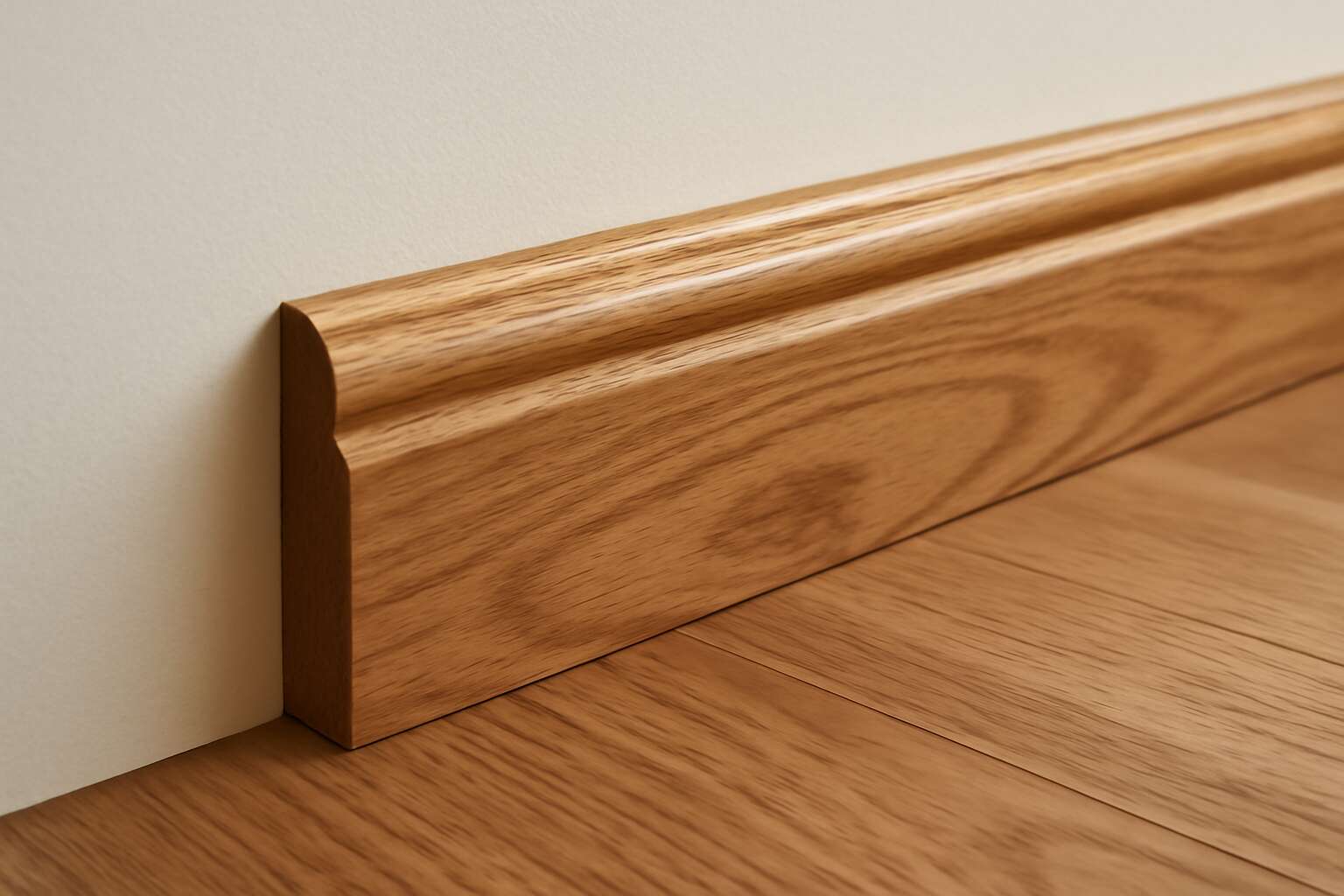
Understanding edge strips for wooden floors
Definition and purpose of edge strips
“Edge strips are the quiet guardians of a floor,” a master carpenter once told me, and you feel that protection the moment you step onto a wooden floor edge strip. In simple terms, edge strips are slim trim pieces at the boundary between wood and walls, anchoring the perimeter without stealing the floor’s character.
They accommodate movement, hide expansion gaps, and offer a clean transition to skirting or carpets. For South African homes facing seasonal humidity swings, edge strips quietly essentialize the boards, keeping the edges resilient.
They serve several essential roles:
- Expansion and contraction control, reducing gaps over time.
- Aesthetic transition that keeps the room’s rhythm smooth.
- Edge protection against scuffs and daily wear on the outer boards.
Used well, the wooden floor edge strip preserves the floor’s silhouette and longevity, letting timber breathe where it must and stay precise where it matters.
How edge strips protect and finish gaps
Seasonal humidity swings across South Africa tug timber by mere millimetres, and you’ll notice it at the boundary where wall meets floor. A wooden floor edge strip sits quietly there, letting boards breathe while delivering a clean, uninterrupted line along the perimeter. It accommodates movement and hides expansion gaps, a patient partner to the timber’s natural rhythm.
Edge strips finish gaps and protect edges, preventing scuffs and daily wear from showing on the outer boards. They anchor the perimeter and guide transitions to skirting or carpets, preserving the room’s rhythm. As one craftsman puts it, they are the quiet guardians of a room—simple, steadfast, and essential in a home where timber carries history.
Typical materials used in wooden floor edge strips
Edge dynamics meet design at the boundary where room and timber meet. In South African homes, timber breathes with the seasons, and a quiet hero holds the line: the wooden floor edge strip. It keeps the rhythm clean while boards shift millimetres, inviting the room to breathe without a jagged edge!
Materials vary with climate, finish, and budget. Typical options include:
- Solid wood edge strips that match your species
- Wood veneer over a stable core for consistency
- Moisture-resistant PVC or vinyl with a wood-like finish
- Metal profiles in aluminium for durability in high-traffic zones
Each choice carries a distinctive rhythm—soft, seamless, or boldly contrasted—shaping transitions to carpets or skirting while guarding the room’s line against wear and tear. I’ve seen the right option align with humidity swings, room style, and the timber’s quiet history.
Common applications in homes and offices
The boundary where timber meets the room is not decoration alone; it is a threshold that decides how a space breathes. “The edge is the punctuation that makes a room breathe,” notes a veteran installer, and in South African homes that breath swings with the seasons. A wooden floor edge strip acts as a quiet boundary, keeping lines clean while timber shifts millimetres, inviting the space to stay legible and calm.
Common applications in homes and offices reveal how edge strips guide transitions between timber and other surfaces—carpet, tile, or concrete—without drawing attention. They anchor the floor’s edge in busy spaces while preserving aesthetic continuity, from entrance corridors to work zones.
- Living rooms and hallways in homes
- Home offices and study corners
- Hospitality corridors and lobbies
- Retail showrooms and showroom floors
Materials and types of wooden floor edge strips
Solid wood edge strips
Materials and types of wooden floor edge strips reveal how a room’s finish can breathe. A wooden floor edge strip can be chosen in solid wood for a timeless, durable finish that frames the perimeter with quiet elegance. In South Africa, this warmth resonates in hallways and lounges!
Solid wood edge strips stand out for their density and natural grain. Common solid-wood options include:
- Solid oak edge strips
- Iroko edge strips
- Sapele edge strips
- Walnut edge strips
These options respond to South African climates with stable behavior and compatible finishes, allowing the grain to speak through natural oils and clear sealers. The result is a restrained elegance that complements both contemporary spaces and traditional interiors.
Engineered wood edge strips
Engineered wood edge strips fuse warmth with predictability. A wooden floor edge strip in engineered form relies on a stable core—often plywood or high-density fiberboard—crowned with a thin real-wood veneer. This structure resists cupping and flex under South Africa’s temperature swings, delivering steadier joins around doors and along walls.
Types and choices begin at the core and veneer pairing. Common engineered configurations include:
- Plywood core with oak, iroko, or sapele veneer
- HDF core with maple or birch veneer
- Multilaminate cores with ash or walnut veneers
For homeowners seeking a singular wooden floor edge strip option that travels with the grain, engineered designs deliver. Finishes range from water-based sealers to oils; engineered edge strips finish smoothly around corners and resist seasonal movement. Paired with a matching skirting, they let the grain glow under warm lighting.
Veneer and laminate edge strips
Veneer edge strips take real wood for a timeless finish. A wooden floor edge strip with a thin veneer rides on a stable core—plywood or HDF—giving you the warmth of oak, iroko, or sapele while staying true to shape as South Africa’s heat and humidity swing. The veneer accepts the same finishes as a solid floor, from water-based sealers to penetrating oils, ensuring a seamless grain around doorways and walls.
Laminate edge strips, by contrast, pair a durable decorative layer with a synthetic core. The result is a cost-conscious option that mirrors exotic grains with consistent texture and easy maintenance. Laminate edge strips resist everyday scuffs and wipe clean with ease, though care around moisture remains paramount; they join neatly with skirting, creating a crisp, modern transition.
Consider these nuances:
- Veneer edge strips use real wood veneer over plywood or HDF cores, offering authentic grain and repairability.
- Laminate edge strips use a durable decorative layer over a composite core, delivering uniform looks and budget-friendly options.
- Finish options include water-based sealers, oils, and waxes.
Alternative materials such as composite and PVC
Materials for edge strips span natural wood, engineered cores, and modern composites, each shaping the room’s tone. A wooden floor edge strip can bridge the gap between floor and wall with warmth, resilience, and a touch of character that endures South Africa’s heat and humidity swings.
Beyond veneer and laminate, alternative materials expand choice without sacrificing performance.
- Composite cores with a protective veneer for stability and wood look
- PVC profiles offering water resistance and low maintenance
- Recycled or sustainably sourced options for eco-conscious spaces
A measured mix of style and practicality, these materials let designers tailor transitions from hallway to living area, ensuring clean sightlines and lasting value.
Installation and fitting techniques
Measuring and prep steps
That final touch—the wooden floor edge strip—can change the whole room. In shops and homes across South Africa (SA), a clean, snug seam speaks of care. As one seasoned artisan says, “finish is folk-sense, not flash.” Experience shows it starts with careful installation and fitting techniques that respect both floor and skirting.
- Measure room length and plan for expansion gaps, doorway transitions included.
- Dry-fit the strip, mark cut lines, and verify it sits flush against walls and skirting.
- Cut with a fine blade, test-fit again, then prepare adhesive or fasteners according to subfloor type.
Fitting technique should be patient: align, brace, and gently tap the strip into place. In damp climates, acclimate the material for 48 hours, then fix with the recommended method. A quiet, precise fit brings warmth and order to any room!
Adhesive mounting methods
“Finish is folk-sense, not flash,” a seasoned artisan reminds me, and the installation of a wooden floor edge strip demands that quiet reverence. In South Africa, the seam between floor and skirting speaks of care more than ornament; it is where warmth and order meet. The wooden floor edge strip should sit true, guiding eyes along a continuous line and inviting feet to travel in ease.
Adhesive mounting methods:
- Self-adhesive backing from the strip itself, ideal for tight tolerances
- High-tack construction adhesive applied to the subfloor
- Hybrid polymer adhesives for stable, long-lasting bonds
Patience is the final tool: align, brace, and gently tap the wooden floor edge strip into position until it sits flush against walls and skirting. Trust the quiet line it creates, a finish that holds through time.
Nail or fastener installation options
When fitting a wooden floor edge strip, the nail or fastener method anchors the line with quiet resolve. In South Africa, corridors and skirtings sing of care; edges must bite the substrate without warping the seam. Finishing nails or brad nails drive clean heads, then countersink and fill to vanish the trace. Predrill near corners to reduce splits, and guide the strip flush against walls and skirting. This is the quiet art of a lasting seam.
Common nail and fastener options keep the line tidy and repairable.
- 16- to 18-gauge finishing nails for a secure, countersunk head
- Brad nails (18-23 gauge) for near-invisible heads
- Pin nails (23-25 gauge) to protect delicate veneers
With patience, the wooden floor edge strip sits flush, guiding feet along a seamless line.
Dealing with corners and transitions
Corner work tests the mettle of any installer, but a quiet seam rewards patience with lasting calm. The choice of technique for the wooden floor edge strip becomes the honest line that respects imperfect walls and shy transitions. Measure with intention, scribe to the wall, and press the strip flush against skirting so the grain reads as one continuous thread—not a collection of misaligned edges.
Corners demand finesse: following the wall contour with a measured scribe, then guiding the strip to sit where it belongs—neither proud nor recessed. In South Africa homes, such care yields a calm, lasting transition.
Think of transitions as the room’s invisible hairline. A seamless line whispers underfoot, guiding movement from room to room with quiet confidence and a finish that endures through seasons and foot traffic.
Common installation mistakes and fixes
Installation and fitting demand the patience of a craftsman and the eye of a poet. The wooden floor edge strip must kiss the wall with a quiet line, pressed flush against the skirting, with an intentional expansion gap to breathe. I measure, scribe to the wall, and guide the strip so the grain reads as one uninterrupted thread. In South Africa, careful technique yields a calm, lasting transition!
Common installation mistakes and fixes
- Poor surface prep or moisture trap under the edge strip; fix by resurfacing and using a compatible adhesive.
- Not following the wall contour; fix by careful scribing and trimming to fit along the skirting.
- Nailing or fastening too tightly; fix by leaving a small expansion gap and using proper fasteners.
Done well, the seam becomes a quiet horizon underfoot, a subtle ribbon that guides transitions between spaces and endures through seasons of foot traffic.
Design, style, and finish considerations
Matching grain, color, and finish with flooring
Design, style, and finish considerations for a wooden floor edge strip deserve a moment of reverence—it’s the garnish on your floor’s main course. In sunlit South African living rooms, the edge strip should whisper, not shout, with grain that lands just right.
Design instincts matter: the edge strip must be as considerate as a good host, aligning grain, color, and finish so the floor reads as a single composition.
- Matching grain direction to the main boards for seamless continuity
- Coordinating color to the floor’s tone, from warm honey to cool oak
- Finishing with a compatible sheen and texture to avoid glare
Finish choices matter as much as the wood itself: a satin or low-gloss sheen carries warmth without glare, while UV-stable coatings resist the South African sun. The edge strip should feel like a natural continuation, never a loud cousin.
Edge strip profiles and edge treatments
“Whisper, not shout—that’s the mandate when the edge of a wooden floor is in the room.” A wooden floor edge strip acts as the floor’s quiet confidant, guiding the eye along the seam with grace. In sunlit South African lounges, subtle profiles—beveled, square-edge, or radiused—create a seamless horizon that never competes with the boards themselves.
- Beveled edge for gentle transition
- Square-edge for crisp, modern lines
- Radiused edge for soft touch underfoot
Finish considerations keep the sequence harmonious. A satin or low-gloss sheen preserves warmth without glare, and UV-stable coatings resist the South African sun. The edge strip should feel like a natural continuation, a soft closing gesture rather than a loud coda.
Pairing with baseboards and skirting boards
Edge strips don’t shout; they whisper, shaping the room’s mood. In sun-kissed South African lounges, a wooden floor edge strip acts as the seam’s quiet designer, guiding the eye along the join with discreet grace.
Design and pairing with baseboards and skirting boards define the horizon. Aim for harmony: keep the edge strip’s profile modest, match baseboard width, and align grain direction across transitions. When baseboards and edge strips share a subdued finish, the room feels timeless. Subtle, indeed!
- Neutral tones that let the grain speak
- Baseboard height balanced with floor depth
- Consistent finish across floor and edge strip
Finish considerations preserve rhythm: satin or low-gloss helps warmth without glare, while UV-stable coatings resist the SA sun. The wooden floor edge strip should feel like a natural closing gesture, a soft coda rather than a shout.
Impact on interior style and room feel
“Edge details are the last note in a room’s melody,” a South African craftsman once told me. In sun-washed lounges from Johannesburg to Cape Town, a wooden floor edge strip does not shout; it whispers, guiding the eye along the join with discreet grace. Design and finish choices carve the room’s horizon: a modest profile, grain aligned across transitions, and a shared, subdued finish that lets baseboards breathe with the floor.
- Neutral tones that let the grain speak
- Baseboard height balanced with floor depth
- Consistent finish across floor and edge strip
Finish considerations preserve rhythm: satin or low-gloss finishes soften warmth and tame glare, while UV-stable coatings stand up to the SA sun. The edge strip should feel like a natural closing gesture, a soft coda rather than a shout, completing the room’s quiet, hopeful mood.
Maintenance, care, and longevity
Cleaning and upkeep tips
Edge care is longevity care. A well-tended floor reveals its secrets—the finish glows, the joints stay snug, and a room feels grounded. In many South African homes, the margins bear the brunt of dust and sun; studying them shows up to 60% of visible wear begins at the edges. Proper attention to a wooden floor edge strip now pays dividends later, preserving warmth and cohesion across seasons.
- Dust with a soft microfiber regularly to prevent grit grinding at seams.
- Wipe with a damp microfiber and a pH-neutral cleaner—never soaking the wood.
- Inspect for gaps, lift, or loose fasteners, and seal promptly.
- Protect from direct sunlight to prevent fading and distortion; use blinds or UV-filtering films.
Cleanliness and periodic checkups extend the lifespan of the wooden floor edge strip, ensuring a cohesive transition that remains visually quiet and durable for years to come.
Repairing damaged edge strips
Edgewise, time writes its quiet poetry across our homes; a floor that breathes with you stays young longer! In many South African interiors, up to 60% of visible wear begins at the margins, where sun and grit press their invisible claim. A well-timed repair of a wooden floor edge strip can preserve warmth and cohesion across seasons, letting joints rest and the finish glow rather than fade into crowded corners.
Repairs, when they are needed, hinge on grain, color, and finish—respect the timber’s natural movement and the room’s light. A well-executed fix keeps the transition discreet and durable, prolonging the life of the wooden floor edge strip and the floor it anchors. In this quiet craft, longevity is born from patience and precision.
Moisture control and humidity considerations
Moisture is the quiet conductor of timber, turning rooms into living weather reports. In South African homes, seasonal swings between heat, sun, and damp can tug at joints and reveals first at the margins, long before the eye catches it.
Managing this drama is less about sweeping rules and more about honoring the wood’s natural rhythm. The edge strip breathes with the room—its grain, color, and finish subtly answering humidity, temperature, and sun exposure. A balanced environment helps the piece age with grace, rather than fade into crowded corners.
A balanced environment helps the wooden floor edge strip age with grace, rather than cracking under mischief or scorching in direct sun.
- Seasonal humidity shifts
- Dust and grit that travel to the edges
Architects understand that comfort and character rise together when climate becomes an ally rather than an enemy.
When to replace edge strips
In South Africa’s living rooms, humidity swirls like a quiet ghost; a wooden floor edge strip keeps its own weather. Seasonal shifts tug at the grain, yet this slender sentinel ages with the room when treated as part of its rhythm. Maintenance becomes a ritual of respect—gently harboring the wood’s memory rather than forcing it to conform, and longevity comes from balance.
To coax longevity from this slender sentinel, I watch for signs rather than chasing quick fixes.
- Gaps widening at margins
- Persistent lifting or cupping of the strip
- Fading finish or darkening in sunlit edges
- Accumulated dust and grit in joints
When such whispers grow loud—gaps linger, the edge strip lifts, or the finish fails to mirror the room—it’s time to replace the wooden floor edge strip rather than chase quick repairs.
Buying guide and value
How to assess quality and durability
The edge is the punctuation mark of a room,” a veteran installer told me. In South Africa’s sun-scorched living spaces, a well-chosen wooden floor edge strip can stretch a floor’s life and lift the room’s aura. A telling stat: 72% of homeowners notice edge finishes before paint or furniture.
Buying guide and value: quality isn’t a flourish but a lifeline—grain alignment, finish durability, and moisture tolerance all whisper of longevity. The right choice lowers future maintenance costs and preserves resale appeal, elegantly pairing with the home’s light and shadows.
- Material integrity and source
- Finish and UV resilience
- Warranty and aftercare support
In the end, the wooden floor edge strip becomes a quiet guardian, marrying craft to daily life with grace.
Cost ranges and budgeting
It’s the room’s final punctuation. In South Africa, 72% of homeowners notice edge finishes before paint or furniture, a striking reminder that budget matters. A wooden floor edge strip can lift ambience now and save on upkeep later; solid wood, engineered, or veneer options each carry different price points that reflect longevity and resilience.
- Material type (solid wood, engineered, veneer)
- Finish quality and UV resistance
- Profile, thickness, and wear layer
- Installation method and labour costs
- Delivery, availability, and supplier reliability
For balance, view value through grain alignment, finish durability, and moisture tolerance. Cost ranges in South Africa typically translate to mid-range options offering a practical blend of beauty and resilience, with higher-end choices priced by species and finish, and lower-cost options still delivering the essential edge protection of a wooden floor edge strip.
Where to buy and what to compare
72% of South African homeowners notice edge finishes before paint or furniture—a reminder that the small details steer the room’s rhythm. The wooden floor edge strip is more than a trim; it anchors transitions, protects gaps, and preserves the look when humidity plays tricks.
Where to buy and what to compare matters. Look for reputable outlets with clear stock, fair delivery, and consistent finish quality.
- Price and value over time
- Finish quality and UV resistance
- Profile, thickness, and wear layer
- Delivery reliability and supplier support
Balance price against grain alignment and moisture tolerance to choose a practical, enduring option that keeps rooms cohesive and easy to maintain.
Warranty, return policy, and after-sales service
Across South Africa, 72% of homeowners notice edge finishes the moment you step into a room, proving that small trims set the room’s rhythm. A wooden floor edge strip should do more than hide gaps; it must withstand humidity swings and aging. Look for retailers with clear stock, straightforward delivery, and finishes that stay true over time—the kind of reliability that keeps spaces cohesive and easy to maintain.
Warranty, return policy, and after-sales service turn a purchase into a partnership. The essentials to confirm include:
- Warranty duration and coverage (materials, finish, adhesion)
- Return window, conditions, and proof of purchase
- After-sales support (installation guidance, replacements, care advice)
The right wooden floor edge strip comes with a promise of service, so you can rest easy knowing help is nearby when humidity and wear test your choice.
Sustainability and eco-friendly options
Across South Africa, 68% of homeowners say sustainability shapes their upgrade choices, and trims are no exception. A well-chosen wooden floor edge strip blends function with longevity. When evaluating value, look beyond price to material stability, humidity resistance, and finish longevity. A thoughtful edge strip does more than close gaps; it upholds the room’s tone through seasons of wear, helping spaces stay cohesive with less maintenance.
Pair sustainability with value by prioritising transparent sourcing, low-emission finishes, and durability that outlast trends.
- FSC- or PEFC-certified timber for the core material
- Low-VOC adhesives and finishes to improve indoor air quality
- Recyclable packaging and option for reclaimed or responsibly sourced stock
These eco-friendly choices translate to enduring value in South African homes.


0 Comments