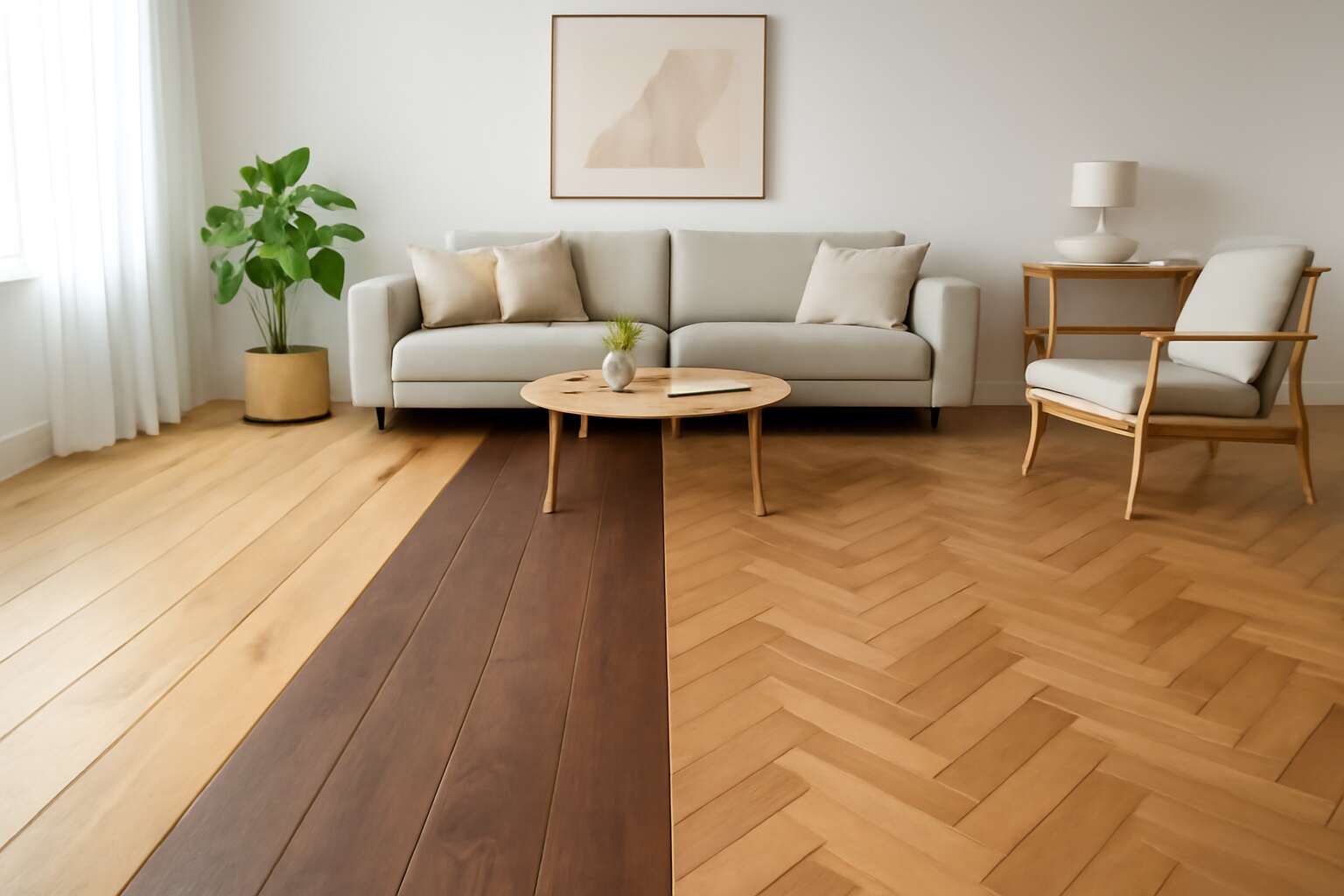
Overview of wood floor types
Solid hardwood basics
Across South Africa, a floor that ages with character is a quiet luxury. “Wooden floors tell stories you walk on,” a Cape Town designer likes to say, and the line sticks. This overview of wooden floors types opens with a simple truth: solid hardwood basics matter.
Solid hardwood is a single piece of timber milled into planks, resilient and refinished many times. The climate here rewards materials that handle sun and humidity with grace. Here’s a quick look at common options, in the language of wooden floors types:
- Solid hardwood: a true plank, refinishable to restore its glow.
- Engineered wood: veneers layered over plywood for stability in SA humidity.
- Bamboo and other fast-growing composites: sustainable choices with distinct character.
Choosing among wooden floors types means weighing looks, hardness, and how the floor ages under South Africa’s bright sun. Solid hardwood basics set a standard for longevity, while engineered wood offers flexibility in moisture-prone spaces—even here.
Engineered hardwood basics
Sun and humidity demand more from a floor than beauty alone. Engineered hardwood has become a reliable backbone for SA homes—stable, refinished, and built to weather our climate. A real veneer over a plywood core delivers warmth with added resistance to swelling, moving less under sun and moisture.
- Core: plywood layers create stability
- Wear layer: thickness dictates refinishing
- Finish options: matte to satin
- Installation: click-lock flexibility
Engineered hardwood sits between solid hardwood and composites in the wooden floors types spectrum, offering a balance of look and resilience. In South Africa, it’s prized for installations over radiant floors or concrete, and for spaces where sun exposure is high but humidity is variable.
Laminate and wood-look alternatives
South African homes are increasingly embracing practical elegance: laminate and wood-look options now account for a sizable share of new floor installations. For wooden floors types, laminate and wood-look options sit at the practical end of the spectrum—delivering warmth without the price tag of solid wood. Laminate blends a wood-printed image with a durable core and a tough finish, offering scratch resistance and easy maintenance. Wood-look alternatives expand the aesthetic with moisture resistance and compatibility with radiant floors or concrete slabs.
Consider these wood-look options:
- Luxury Vinyl Plank (LVP/LVT) for authentic visuals with superior water resistance
- Wood-look porcelain tile for durability in high-traffic areas
- Bamboo and other natural-look planks for sustainability and warmth
- High-quality composite planks that resist fading in strong sun
These formats fit South Africa’s climate and living spaces, balancing cost, resilience, and style across homes.
Key factors for choosing by room and climate
Six in ten new South African homes embrace wooden floors types, chasing warmth and resilience over sheer luxury. The choice is a climate-savvy move, smoothing the rough edges of humidity, heat, and daily life with quiet grace!
Overview of options reveals a practical spectrum beyond solid wood myths. LVP and wood-look options offer authentic visuals with superior moisture resistance, while bamboo brings sustainability and warmth to living spaces. Key players include Luxury Vinyl Plank (LVP/LVT), wood-look porcelain tile for high-traffic zones, and bamboo or other natural-look planks, plus high-quality composite planks designed to resist sun fade.
Key factors by room and climate:
- Moisture exposure
- Foot traffic
- Sunlight and radiant heat
- Subfloor moisture
In South Africa’s diverse climates, color and resilience guide every selection.
Maintenance expectations and refinishing prospects
Six in ten new South African homes embrace wooden floors types, proof that warmth beats ostentation every time. A floor that ages with your life isn’t a luxury—it’s a quiet statement. Maintenance and refinishing prospects aren’t afterthoughts; they’re the long game.
Maintenance expectations for wooden floors types lean on simple respect: light cleaning, moisture control, and shielding from harsh sun.
- Wipe spills promptly with a soft microfiber—no soaking the boards.
- Keep humidity stable to prevent gaps or warping.
- Use furniture pads and entrance mats to cut daily wear.
Refinishing prospects vary; some surfaces handle sanding and re-coating, others rely on renewing finishes. These realities shape how wooden floors types age in South Africa’s sun and humidity.
Solid hardwood vs engineered hardwood
What is solid hardwood
In South Africa’s sun-warmed living rooms, wooden floors types present a tangible choice between lasting warmth and modern convenience. Solid hardwood is a single, solid plank milled from a living tree, offering unmatched grain and character. It’s the timeless option that evolves with you, developing a patina that tells your house’s story!
Engineered contenders share the stage, but solid hardwood remains a different creature altogether: it moves with humidity and can be refinished multiple times, making it a long-haul investment for South African homes with varying climate. Expect installation considerations—appropriate acclimation and a sturdy subfloor—to help this piece age gracefully.
To visualize the contrast, consider these quick points:
- Refinishing potential: solid hardwood welcomes renewed color and depth.
- Moisture sensitivity: movement demands careful humidity management.
- Patina over time: character evolves with use and light.
What is engineered hardwood
South Africa’s sunlit lounges demand floors that stay steady as the seasons swing. Engineered hardwood is real wood at the surface—an attractive veneer over a layered core built for stability. It delivers warm grain with far less seasonal movement than solid.
In the wooden floors types landscape, engineered hardwood can be the pragmatic middle path: easier to install, more resistant to humidity swings, and suitable for floating or glued-down installs. The trade-off? The veneer thickness limits refinishing.
- Stability across climate shifts
- Flexible installation options
- Refinishing limits tied to veneer
For the full-on patina and multiple refinishings, solid hardwood remains the romance—the right choice in drier spaces or upper-storey rooms. In many SA homes, engineered hardwood wins on ground floors and sunrooms where climate quirks demand steady performance.
Durability and refinishing differences
“Timber doesn’t just sit under your feet—it speaks,” a floor whisperer might say. In South Africa, floor drama comes with the seasons, and in the realm of wooden floors types, solid hardwood and engineered hardwood each tell a different resilience story.
Solid hardwood carries the romance of a surface you can renew—refinished many times, with durable wear and a life. But it rewards a stable environment; humidity and seasonal movement can stretch or shrink planks over time.
Engineered hardwood stays calmer: a real-wood veneer over a layered core resists humidity swings and suits floating or glued-down installs. The catch? Refinishing is more limited, dictated by veneer thickness.
- Refinishing cycles
- Moisture handling
- Installation versatility
In the SA landscape, the choice comes down to space and climate—solid hardwood for dryer, sunlit rooms; engineered for rooms where climate refuses to rest. The floor, I swear, chooses you as much as you choose it.
Best rooms and climates for each
South Africa’s climate swings can turn a floor into a weather report. Among wooden floors types, solid hardwood and engineered hardwood each respond differently to those rhythms. I’ve seen solid hardwood thrive in dry, sunlit living rooms and bedrooms where humidity stays steady.
- Solid hardwood: best in climate-controlled spaces—quietly resilient in dry rooms with stable heating; avoid high humidity zones like bathrooms.
- Engineered hardwood: handles humidity swings and fluctuating temperatures; lends itself to kitchens, sunrooms, and areas with underfloor heating or floating installations.
In SA, the choice often comes down to the intended space and climate, with engineered for variable conditions and solid for consistently dry rooms.
Cost and installation considerations
Flooring is the room’s first breath, the surface that steers mood before a speaker speaks. Among wooden floors types, cost and installation loom large here in South Africa. Solid hardwood carries enduring charm but demands a higher price and nails—its installation a careful ritual. Engineered hardwood, crafted to ride humidity swings, often flows in with a quicker, floating fit and lower upfront cost!
Costs hinge on width, finish, and labor. Solid requires acclimation and precise subfloor work, while engineered tolerates movement and underfloor heating better. Finishing options and refinishing prospects diverge—solid can be rejuvenated many times; engineered offers more limited sanding.
- Typical cost drivers: grain, width, and finish
- Installation method: nail-down solid vs floating engineered
- Underfloor heating and humidity tolerance
Finish options and maintenance
Surface finishes compared
Finish is the quiet conductor of timber’s glow; a well-chosen seal can turn a plain room into a breathing stage. For wooden floors types, the finish writes the life story of the wood—whether it gleams softly or wears a weathered matte with grace.
Here are finish options that suit South African homes:
- Natural oil or hardwax oil for a breathable, tactile surface that ages gracefully
- Water-based polyurethane for a clear, durable coat that preserves colour
- UV-cured coatings for rapid cure and minimal odour in busy spaces
Maintenance is the daily ritual that keeps the glow: sweep, then damp-mop with a pH-neutral cleaner. Shield with mats, tame humidity around 40-60%, and schedule refinishing before wear shivers through the grain. wooden floors types reveal character through care!
Sheen levels and aesthetics
Finish is the quiet conductor of timber’s glow, and among wooden floors types it writes the life story of each plank—whether it gleams softly or wears a weathered matte. In South African homes, breathable finishes bring warmth; I love how UV- and water-based coats lock colour for busy spaces!
- Natural oil or hardwax oil for a breathable, tactile surface
- Water-based polyurethane for a clear, durable coat
- UV-cured coatings for rapid cure with low odour
Maintenance is the daily ritual that preserves the glow. Sweep, then damp-mop with a pH-neutral cleaner; use mats at thresholds; keep humidity around 40-60% to protect the finish. Sheen levels—matte, satin, semi-gloss, high-gloss—define the room’s personality.
Maintenance and care by finish
Finish is the quiet conductor of timber’s glow, shaping wooden floors types with character. In South African homes, breathable options carry warmth: natural oil or hardwax oil give a tactile glow; water-based polyurethane preserves colour with a clear, durable shield; UV-cured coatings cure fast and promise low odour in busy spaces. Each finish breathes differently, letting the planks express their grain and mood while remaining practical under daily life.
Maintenance and care by finish keep that glow alive. I love how the finish ages with the room’s mood; Sweep regularly, then damp-mop with a pH-neutral cleaner; place mats at thresholds; and keep humidity around 40-60% to protect the surface. Sheen levels—matte, satin, semi-gloss, high-gloss—shape the room’s personality as light dances across the grain.
- Sweep and dust
- Damp-mop with a pH-neutral cleaner
- Use entrance mats
- Maintain 40-60% humidity
Refinishing and repair specifics per finish
Timber hides its glow until the finish speaks, and in Cape Town’s light that speech bends the room. “The grain is the story; the finish is the punctuation,” whispers a timber artisan.
Breathable oils gift warmth, hardwax oil adds resilience, and polyurethane bands the edges of daily life. For wooden floors types, refinishing strategies hinge on the veil chosen: oil finishes mellow with age, inviting quiet re-oiling; hardwax oil resists wear and accepts spot repairs; polyurethane layers demand a fresh topcoat when the gloss wanes, especially the water-based kind which preserves colour. UV-cured coatings cure in moments, with low odour and minimal downtime.
- Oil finishes: subtle re-oiling and easy touch-ups to restore glow
- Hardwax oil: deeper durability with local repair opportunities
- Polyurethane/UV-cured: recoating cadence to maintain protection and colour
These choices thread the room’s mood through seasons of light, shaping the house’s darkly beautiful chorus.
Scratch and wear resistance by finish and occupancy
“The grain is a memory; the finish is the voice of the room,” a timber artisan once told me, and that voice travels with Cape Town’s light. Finish options shape mood and life on wooden floors types, from warm oils to tough polyurethane coats.
- Oil finishes: mellow with age, easy touch-ups to restore glow through simple re-oiling.
- Hardwax oil: deeper durability, local spot repairs, natural look that begs to be touched.
- Polyurethane/UV-cured: longer recoat cycles, colour stability, minimal odour.
In busy homes with kids, pets and guests, scratch resistance matters. Oil shows marks but breathes; hardwax oil resists wear with local repairs; polyurethane stays cleaner and preserves colour, especially UV-cured coats.
The finish threads the home’s daily rhythm, turning footfalls into a quiet chorus.
Wood species and aesthetics
Popular species and looks
Grain is the sentence your room speaks without words—the wrong wood mutes a space, the right one can sing. ‘The grain writes the story under your feet,’ they say, and I felt the floor lean in!
Within wooden floors types, species govern mood as surely as light. Pale oak lends airiness; rich walnut or sapele add gravity; merbau and iroko wink at tropical warmth. In South Africa, teak and afrormosia are prized for resilience and glow, while engineered variants keep humidity honest! Grain ranges from white sapwood to espresso heartwood, offering options for modern minimalism or rustic warmth. This interplay of hue and grain shapes light, flow, and mood.
For popular looks, consider the following silhouettes:
- Light oak with straight, airy grain
- Rich walnut with dramatic figure
- Golden merbau with amber glow
- Iroko or afrormosia for sun-warmed depth
Grain patterns and color variation
Two inches of grain can steer a room’s mood—it’s the first thing the eye reads when you cross the threshold. A surprising stat anchors this: 68% of a space’s perceived warmth comes from the floor’s pattern and color. Within wooden floors types, grain patterns and color variation write the ambience as surely as a light switch.
Color variation comes from sapwood to heartwood, pale to espresso. The grain can be straight, wavy, or interlocked, and this spectrum lets you tailor mood without changing the walls. Lighter tones brighten, deeper hues anchor, and shifting shade creates a sense of movement underfoot. I watch the light travel and feel the room wake up!
Here are grain patterns to consider—and how they translate to feel:
- Straight grain for calm, airy spaces
- Curly or fiddleback grain for dramatic texture
- Interlocked grain for lively depth
Speak to your space with the choices of wooden floors types—the right grain and color variation become a quiet chorus that carries a room through seasons.
Sustainability and sourcing considerations
The floor is the first word your feet read, and in South Africa it can set a room’s tone faster than a paint job. Some studies claim up to 75% of warmth comes from color and grain. Within wooden floors types, oak brightens a space, iroko adds sun-burnished depth, and afrormosia lends weight without crowding the walls. Light travels across planks, and mood shifts with every step—a quiet dialogue between texture and light, and I feel the floor talk back.
Sustainability and sourcing are not afterthoughts but the frame of good design. Look for FSC-certified or locally milled options, consider reclaimed planks, and ask about harvest practices and transport footprints.
- FSC or PEFC certification confirms responsible forestry.
- Local milling reduces transport emissions and supports communities.
- Reclaimed wood can tell a history while cutting new impact.
These choices honor craft and climate alike, letting wood tell its own story.
Matching with interior design styles
In South Africa, the floor is the first thing your feet meet—and it can set a room’s tone faster than a fresh coat of paint. Some studies say up to 75% of warmth comes from color and grain. The right wood takes you from function to mood in a single step.
Among wooden floors types, oak brightens a space and keeps lines clean, iroko offers sun-burnished depth, and afrormosia lends weight without crowding the walls. Light travels along the grain, and the design sense shifts with each footfall.
- Oak: bright, versatile, modern or traditional
- Iroko: warm, tropical glow with durable performance
- Afrormosia: dense, stately presence for grand rooms
These choices align with interior design styles—from minimalist South African homes to earthy, texture-forward interiors. The wood speaks in color and tactility, not loud slogans, and it forgives or finesses the room’s scale as the light moves!
Exotic woods: pros and cons
In a sun-warmed Cape Town lounge, exotic woods unfurl a heartbeat of place. Some designers note that up to 60% of a room’s mood comes from timber’s grain and glow. When exploring wooden floors types, these species bring drama, texture, and memory—without shouting, just the right note of travel and craft.
- Teak — natural oils resist moisture and wear; price and ethical sourcing require careful selection.
- Sapele — warm tone and good stability; can darken with sun exposure in bright rooms.
- Bubinga — striking grain and durability; higher cost and maintenance to preserve contrast.
Choosing exotic woods means inviting a story into the floor—one that travels beyond borders and lands softly underfoot.
Installation, climate, and durability
Acclimation and subfloor preparation
“If the house breathes, the floor should too,” a veteran installer likes to say. Climate swings in South Africa make the first step in laying floors crucial: installation should begin with a precise acclimation plan and solid subfloor prep.
Acclimation and subfloor preparation are the quiet backbone. In our climate, timber should come to room ambience before install, and the subfloor must be dry, flat, and clean to avoid movement after fit.
- Allow timber to reach room conditions (3–7 days)
- Match moisture content of timber and subfloor
- Level any dips and fix uneven areas
- Ensure a clean, dry surface free of debris
A careful installation plan supports long-term durability of wooden floors types in varied SA homes.
Installation methods
Climates swing like a drumbeat across South Africa, and the floor answers in kind. For wooden floors types, the installation philosophy must listen to moisture, seasons, and the way timber breathes. The space becomes a living instrument where light, humidity, and grain negotiate expansion and contraction, shaping room mood as surely as paint. A measured approach to selecting boards and framing joints secures longevity and quiet elegance in homes that straddle coast and interior.
There are several installation methods, each with a distinct dialogue with the house and with wooden floors types.
- Floating (click-lock or tongue-and-groove systems)
- Nailed or stapled down solid wood
- Glue-down engineered boards for stability and sound control
Durability rests on aligning product behavior with climate realities. In SA, coastal humidity and inland dryness alike test stability, while a fitting method preserves warmth and resilience.
Humidity and moisture considerations
Humidity shifts up to 20% between seasons are common in SA homes, so selecting wooden floors types means listening to moisture! The room breathes; the floor should breathe with it. Humidity’s tempo—from coast to inland—drives how boards move.
Installation is the first conversation between house and timber. Floating (click-lock or tongue-and-groove), nailed or stapled down solid wood, and glue-down engineered boards each respond differently to moisture and heat.
- Floating (click-lock or tongue-and-groove systems)
- Nailed or stapled down solid wood
- Glue-down engineered boards
In SA, coastal humidity and inland dryness test stability. The right method balances warmth and resilience across rooms.
Durability rests on aligning product behavior with climate realities.
Wear ratings and residential vs commercial suitability
Across South Africa, humidity is a fickle conductor, nudging wooden floors types to breathe as the seasons turn. A coastal dawn swells with moisture; inland heat dries the boards. The floor must move with the room, not against it.
Installation is the first conversation between house and timber. Floating (click-lock or tongue-and-groove), nailed or stapled down solid wood, and glue-down engineered boards each answer moisture and heat in their own way.
- Floating: quick, moisture-friendly
- Nailed or stapled: traditional rigidity
- Glue-down: solid, low movement
Coastal humidity and inland dryness test stability; the right method balances warmth and resilience across rooms. Durability rests on wear ratings and whether the space is residential or commercial, where traffic and furniture demand different endurance.
Choosing wooden floors types means choosing how warmth and longevity live together underfoot. The balance endures, step by step.
DIY vs professional installation considerations
Installation is the opening act in the timber tale. Across coastal rooms and inland spaces, wooden floors types reveal themselves—floating, nailed/stapled, or glue-down—each tuned to moisture and heat in its own way. Coastal humidity swells; inland dryness retreats; the floor must breathe and move with the room, not resist it.
Here are the practical tradeoffs:
- DIY can shave upfront costs but demands patience, accurate acclimation, and careful subfloor checks.
- Professional installation promotes consistent results, ensures proper moisture control, and aligns with wear ratings for the chosen room.
Durability rides on wear ratings and the space’s traffic; in South Africa, a bustling home office adjacent to a sunny lounge demands resilience from wooden floors types. The decision isn’t only about beauty; it’s about how warmth and longevity live underfoot, day after day.

0 Comments